The commercial story of massage in England is not only a health story. It is also a tourism story. Wellness spending grows when visitors have time, confidence and reasons to add restorative services to a trip, and London sits at the centre of that pattern. Hotel spas, destination day spas, treatment-led stays and premium short appointments all benefit when travel is active enough to support discretionary experiences. For massage businesses, that means visitor demand is not a side channel; it is often one of the category's strongest revenue engines.
The Office for National Statistics reported that overseas residents made an estimated 42.6 million visits to the UK in 2024 and spent an estimated GBP32.5 billion. That is the national backdrop. VisitBritain's regional data then shows why London still matters disproportionately: inbound spend to London in 2024 was up compared with both 2019 and 2023. The Rest of England also exceeded pre-pandemic levels for spend, even though some regions were slightly softer than 2023. For wellness businesses, this means two things at once. London remains the strongest international shop window, and England beyond London still has genuine potential in spa and recovery-led travel.
The Global Wellness Institute gives this an even sharper frame. It estimates that the UK generated 23.61 million wellness tourism trips in 2022 and US$15.62 billion in wellness tourism expenditure. Of those trips, 20.78 million were domestic and 2.83 million were inbound. Domestic wellness tourism expenditure reached US$10.54 billion, while inbound wellness tourism expenditure reached US$5.08 billion. The crucial takeaway is that England's wellness visitor economy is not only about overseas luxury travellers. Domestic travellers are the larger volume base, and they matter enormously to regional spa businesses.
Why London captures the premium end
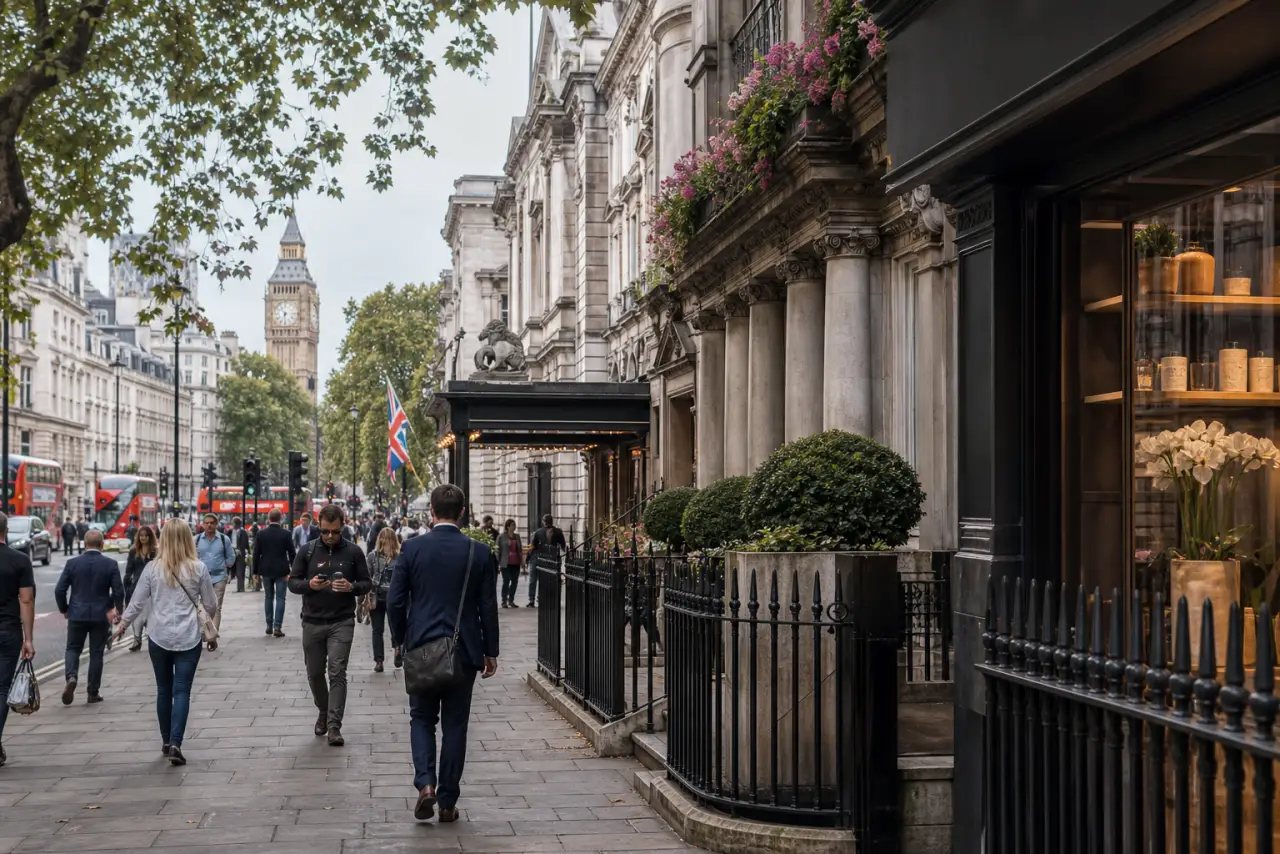
London performs differently from many other parts of England because it layers wellness into a dense hospitality ecosystem. A visitor does not need to plan a full retreat to buy massage in London. They can add it to a business trip, a shopping weekend, a theatre stay, a luxury hotel booking, a recovery day after long-haul travel or a higher-end self-care treat while visiting friends. This flexibility is one of London's biggest competitive advantages. It lowers the barrier to purchase and lets massage businesses sell both scheduled treatments and impulse upgrades.
Market mix matters too. VisitBritain notes that in 2024 the UK welcomed a record 5.6 million visits from the United States, with total spending of GBP7.3 billion, and that London remained the leading destination for US trips, accounting for 48% of visitor nights. That matters to the massage category because the US market overlaps strongly with the kind of guest who already understands hotel wellness, spa booking and premium bodywork as a normal travel spend rather than an occasional indulgence. London benefits when those habits arrive with the traveller.
The capital also has strong “secondary wellness” potential. GWI distinguishes between travellers whose trip is primarily motivated by wellness and those who maintain wellness while travelling. In the UK, secondary wellness tourism accounted for the overwhelming majority of trips in 2022. That distinction is extremely useful for operators. Most massage businesses in London are not waiting for someone to fly in specifically for a treatment. They are serving travellers who want to preserve comfort, sleep, recovery or routine while they are already away from home.
What England outside London can still win
If London dominates visibility, the wider English market often has an advantage in depth and stay quality. Regional hotel spas, country-house properties, coastal wellness offers and destination day spas can compete on time, space and atmosphere in ways central London often cannot. Domestic visitors are especially important here because they are more likely to travel for a weekend with an explicit wellness intention, even if massage is only one part of the trip.
This is where the domestic tourism numbers become commercially valuable. When more than twenty million domestic wellness trips are being taken across the UK, operators outside the capital have permission to build products for British residents rather than trying to imitate the visitor profile of Mayfair or Knightsbridge. Packages that combine sleep, thermal facilities, slower pacing and one or two strong signature treatments can be a better fit for regional England than trying to reproduce a London luxury aesthetic without London's demand density.
That also has staffing implications. Visitor-led massage businesses do not only need beautiful rooms; they need reliable scheduling, treatment consistency and teams who can deliver for both first-time guests and repeat local clients. In hospitality terms, service design matters almost as much as design style. The venues that convert travel demand into repeat reputation are usually the ones that make the treatment experience feel clear, calm and professionally managed from booking to aftercare.
There is also a seasonality advantage. International city breaks can be more volatile, but domestic wellbeing travel often works in shoulder periods when people are looking for rest rather than sightseeing. Massage and spa businesses that align with this rhythm can create steadier utilisation through off-peak offers, recovery weekends, wellness memberships and midweek packages. In practical terms, tourism-linked massage businesses do best when they are not relying on one type of guest alone.
Why professional standards matter more as the category grows
Wellness tourism can raise average ticket values, but it also raises expectations. Travellers paying for hotel or destination spa experiences expect punctuality, hygiene, booking clarity, polished communication and treatment descriptions they can understand quickly. The reputation of the wider category depends on whether those expectations are met. As visitor demand increases, so does the cost of inconsistency. One poor treatment may not only lose a customer; it can weaken trust in the whole venue.
This is one reason transparent directories and source-backed listings matter. Visitors unfamiliar with local operators often need clearer signals than residents do. They want to know whether a venue has an official website, what kind of treatment it is really offering, whether the price band is plausible, and whether it feels like a proper spa, a serious massage studio or a generic beauty room with wellness language pasted on top. Better information helps the stronger businesses win.
For England's massage industry, the bigger opportunity is not to chase every luxury signal. It is to build products that match the realities of contemporary travel: shorter stays, higher expectations, more self-directed booking and a stronger desire for restorative experiences that feel worth the time. Massage fits that shift naturally. It is time-efficient, understandable across cultures and easy to bundle into hospitality, sport and lifestyle travel.
What the numbers suggest for the next phase
The sector's next phase will probably belong to operators who can bridge local credibility and visitor readiness. In London, that means presenting massage as part of a serious urban wellbeing offer, not as an afterthought to beauty or hotel amenity. In the rest of England, it means recognising that domestic wellness tourism is large enough to support strong treatment-led experiences when they are packaged thoughtfully and delivered consistently.
The best businesses will treat massage not as a passive add-on, but as one of the most efficient ways to convert visitor interest into real perceived value. A guest may forget a generic lounge quickly. They are less likely to forget the treatment that helped them sleep after a flight, unwind after a meeting or turn a hurried trip into something restorative. That is the strategic reason massage deserves a bigger place in England's visitor economy conversation.